
Organizations Urge Puerto Rico House of Representatives to Restore Protections for Immigrant Students Removed from Senate Bill 1062
November 13, 2026 3:00 pm
Spokesperson


Media Contact
San Juan, P.R. — The organizations that make up the Migrar es un Derecho (Migration Is a Right) campaign called on the Puerto Rico House of Representatives on Friday to reverse several amendments introduced to Senate Bill 1062, restore the protections included in its original version, and hold public hearings to assess the measure’s implications for the fundamental rights of immigrant children. If these demands are not addressed, the organizations urged lawmakers to reject the bill.
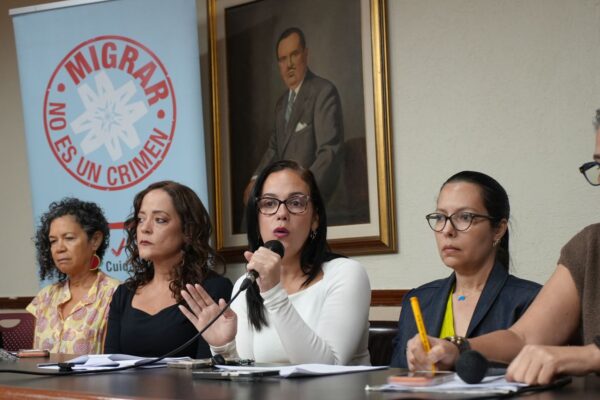
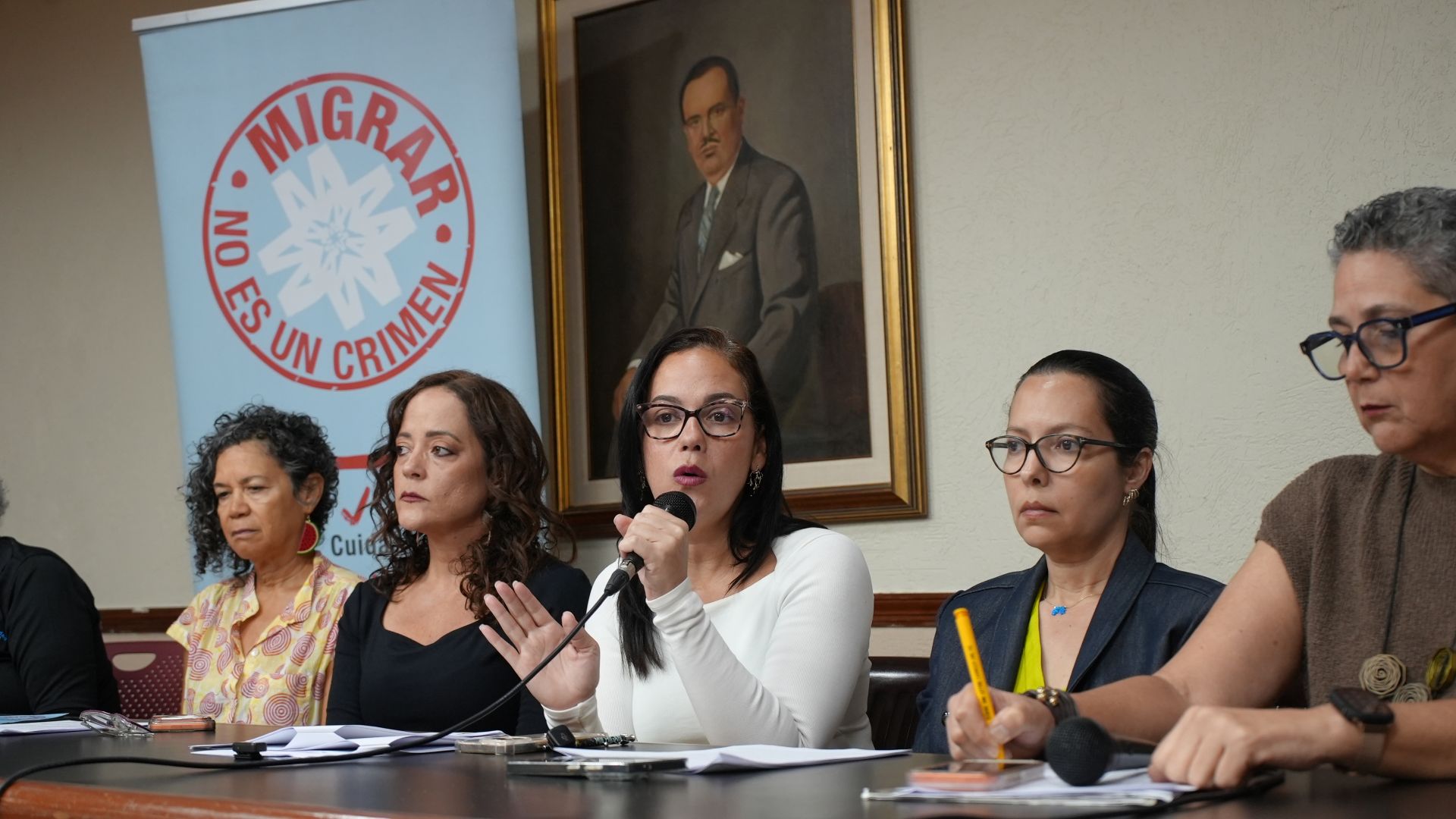
During a press conference, the American Civil Liberties Union (ACLU) of Puerto Rico, Kilómetro Cero, Amnesty International Puerto Rico, and Comuna Caribe presented a legal analysis of the amendments approved by the Senate, warning that they eliminate essential safeguards intended to protect students from interventions by federal immigration authorities in Puerto Rico’s public schools.
As originally introduced, the bill sought to establish stronger protections for immigrant children, regardless of their immigration status, by restricting immigration enforcement actions on school grounds and establishing mechanisms to protect personal and confidential information. However, amendments introduced during the legislative process substantially altered its scope and created ambiguous provisions that could facilitate the very enforcement actions the measure was intended to prevent.
“The House of Representatives has a responsibility to correct the amendments introduced in the Senate, restore the original safeguards, and open a public hearing process to examine and assess the consequences of this measure so that its implementation can be truly effective,” said attorney Annette Martínez Orabona, executive director of the ACLU of Puerto Rico, during a press conference at the Puerto Rico Bar Association.
The bill was introduced on February 6, 2026, by Senator Nitza Morán Trinidad, with other senators from the New Progressive Party (PNP) as co-sponsors. The organizations reiterated their support for the original measure, which was referred to the Senate Committees on Government and on Education, Art, and Culture. In late October, the committees issued a joint report containing amendments that undermined the bill’s purpose and would unquestionably facilitate immigration agents’ access to school grounds. The ACLU of Puerto Rico released its analysis of those amendments on Thursday, before the measure was brought to a vote in the Senate without public hearings.
Before the vote, one of the most problematic amendments was removed. That provision would have allowed immigration enforcement actions based solely on an “administrative warrant or other document.” Nevertheless, although a judicial warrant requirement was established, the language lost strength, clarity, and consistency. The amended bill continues to contemplate administrative warrants in other circumstances, makes certain safeguards optional, and erroneously suggests that local protections cannot be implemented in response to federal agents’ actions.
Removal of Protections and Ambiguity Surrounding Judicial Warrants
One of the most concerning changes appears in Article 7(a), where the amendments eliminated the specific requirements that a judicial warrant originally had to meet before authorities could intervene with students. The original language required that the warrant be issued by a court of competent jurisdiction, signed by a judge, and identify both the student and the legal justification for the intervention. However, the version approved by the Senate merely requires school personnel to request the presentation of a judicial warrant and verify its scope and validity, without retaining the detailed criteria that provided greater clarity and protection.
Particularly troubling is the provision stating that an administrative warrant does not, by itself, authorize access to nonpublic areas of a school, introducing an ambiguous distinction between public and private spaces within school facilities. This ambiguity is especially dangerous because a public school is not a space open to unrestricted access. School facilities are subject to controls and restrictions designed to ensure the safety and privacy of the school community. Furthermore, an administrative warrant issued by an immigration agency is not equivalent to a judicial warrant signed by a judge.
The organizations warned that this language does not establish a categorical prohibition against using administrative warrants to justify access to school grounds. On the contrary, by limiting the restriction to certain nonpublic spaces and legal circumstances, it leaves open the possibility that federal authorities could invoke an administrative warrant to enter areas considered public or areas where judicial authorization is not required.
“It is deeply outrageous that, while our immigrant communities face an escalation of persecution and violence by ICE, and as people across the United States have demonstrated their overwhelming rejection of violent, anti-immigrant policies, our Senate has chosen to approve a measure that weakens the very protections it was originally intended to guarantee. Puerto Rico cannot subordinate the dignity and human rights of our immigrant communities, which are an integral part of this country, to the immigration policies of the Donald Trump administration,” emphasized Mari Mai Narvaez, executive director of Kilómetro Cero.
Weakened Protections for Students, Families, and School Personnel
The analysis, led by attorney Lolimar Escudero Rodríguez, public policy attorney at the ACLU of Puerto Rico, also identified the elimination, in Article 6, of the requirement to obtain legal counsel before disclosing student information. This change weakens a fundamental safeguard against the improper disclosure of personal and confidential data.
“No student should have to fear that going to school could expose them to detention or separation from their family,” Escudero Rodríguez said.
Additionally, Articles 7 and 8 of the original bill established clear protective mechanisms, including notifying parents or guardians, ensuring that students receive support and accompaniment, and consulting the Puerto Rico Department of Justice to verify the legal grounds for an intervention.
However, the language in the approved version suggests that these safeguards could be intended to interfere with an enforcement action, when their actual purpose is to protect students’ rights, ensure communication with their families, and verify the legality of authorities’ actions. Regarding consultation with the Department of Justice, the approved text uses permissive language such as “may,” eliminating the mandatory nature of that step.
The organizations warned that these limitations could reduce the safeguards to mere formalities with little or no practical effectiveness by preventing school personnel from having the time and legal guidance necessary to verify the legal grounds for an intervention and protect students’ rights.
Furthermore, the amended version no longer retains an explicit prohibition against immigration enforcement actions inside classrooms and leaves open the possibility of such actions during school hours. These changes could weaken protections even beyond those established in the protocol adopted by the Puerto Rico Department of Education in February 2025.
“Schools must be safe spaces for learning, not settings for immigration persecution. The language approved by the Senate creates uncertainty about ICE’s authority and the obligations of school personnel, precisely when the law should establish clear limits and unequivocal protections,” said Liza Gallardo, executive director of Amnesty International Puerto Rico.
The Right to Education Does Not Depend on Immigration Status
The organizations also recalled that, in Plyler v. Doe (1982), the U.S. Supreme Court recognized children’s right to access public elementary and secondary education regardless of their immigration status. Likewise, constitutional protections against unreasonable searches and seizures, the right to due process, and the right to privacy remain in effect regardless of changes in federal immigration policies.
They further warned that the presence or threat of immigration enforcement actions in schools can generate fear, absenteeism, and school dropout, while also discouraging immigrant families from accessing essential services. This situation has already been documented in Puerto Rico.
Also present at the press conference were attorney Yarima González, a member of the Immigration Commission of the Puerto Rico Bar Association; Miguel Rivera, vice president of the Teachers’ Federation; Eva Ayala, president of Educamos; and Susan Rivera Miranda, representing the organization Únete.
On Friday, the ACLU of Puerto Rico submitted its analysis to the Education Committee of the House of Representatives, with the endorsement of the organizations participating in the Migrar es un Derecho campaign. The coalition reiterated that the House has both the opportunity and the responsibility to prevent legislation originally designed to protect immigrant children from ultimately weakening their rights.
Related Issues
Related Content

Senate Bill 1062
ACLUPR Confirms Administrative Subpoena: DTOP Secretary Cooperated Without Objection with ICE’s “Fishing Expedition” Targeting Immigrants
Stay Informed
Sign up to be the first to hear about how to take action.
By completing this form, I agree to receive occasional emails per the terms of the ACLU’s privacy statement.
By completing this form, I agree to receive occasional emails per the terms of the ACLU’s privacy statement.