Mass surveillance proposals under consideration by the legislature threaten constitutional protections
September 21, 2026 1:00 pm
Spokesperson


Media Contact
San Juan, P.R. — The Puerto Rico Chapter of the American Civil Liberties Union (ACLU) warned on Monday about the advancement of legislative measures promoting public hyper-surveillance as a tool to achieve alleged public safety goals, despite the impact such technologies and strategies have on various constitutional rights and protections.
"In presenting our analysis of these measures, we reiterate our call for legislators to hold public hearings and allow for a broad, transparent discussion regarding the implications that bills like these have—or could have—on people's rights," stated attorney Annette Martínez Orabona, Executive Director of the ACLU of Puerto Rico. "The country needs public safety, but that goal is not achieved through hyper-surveillance," she noted.
As of Monday, at least three bills proposing hyper-surveillance as a public safety strategy are under consideration by the Legislature. The ACLU of Puerto Rico submitted position papers in all three cases, arguing that these bills, as currently drafted, threaten protections such as the rights to privacy and personal intimacy, freedom of expression, and due process of law.
One of these measures is Senate Joint Resolution 198, which seeks to mandate that the Department of the Treasury require the installation and operation of video surveillance camera systems in establishments applying for or renewing a license to sell alcoholic beverages. The bill was introduced on July 14, 2026, by Senator Carmelo Ríos Santiago. "The draft legislation does not clearly specify the limitations regarding the information that could be required by or surrendered to the State upon request, nor does it outline the safeguards that would be established to protect individuals' privacy, freedom of expression, and due process rights. In practice, the measure could foster an environment of excessive surveillance that undermines individuals' constitutional protections," argued Lolimar Escudero Rodríguez, the organization's Public Policy attorney, in the submitted explanatory memorandum.
The organization warned that, without safeguards, "the requirement to install cameras could become a tool for government surveillance and persecution, susceptible to misuse for identifying, investigating, or intimidating individuals based on political or religious grounds or their immigration status."
Another measure under consideration is Senate Bill 974, which seeks to define cybercrimes and amend the Penal Code of Puerto Rico. The bill was introduced on January 22, 2026, also by Senator Ríos Santiago.
The organization cautioned that this type of legislation can conflict with freedom of expression when it employs categories that are ambiguous or broader than the constitutional definition. This can have a chilling effect on protected speech and lead to the criminalization of expression, even in the context of artistic performances or demonstrations.
For instance, the measure defines the crime of "violation of privacy." Yet, rather than guaranteeing such protection, it undermines it. If the bill were to advance in its current form, legitimate actions by researchers, journalists, or activists exposing government-related issues could be classified as criminal offenses. "This impacts freedom of expression, as imprecise definitions can be instrumentalized to police or criminalize public discourse, online protest, or criticism of public officials on social media, for example," Escudero Rodríguez noted in his analysis.
The third measure under review is House Bill 897, which seeks to amend Law 187-2016 (the Mayra Elías Hit-and-Run Alert Law) as well as Law 83-2025 (the Puerto Rico Police Law). The bill was introduced on October 7, 2025, by Representatives Ramón Torres Cruz and Félix Pacheco Burgos.
"Public safety is a shared goal. However, a legislative measure like this—which contemplates the use of technologies such as automated license plate reader (ALPR) systems—requires a broad discussion that includes considering and acknowledging the threats and potential constitutional rights violations associated with this type of technology," stated attorney Martínez Orabona. "There is no shortage of examples in the United States of misuse of these types of cameras by officers, as well as errors regarding the handling and operation of these systems," he noted.
What is happening with ALPRs?
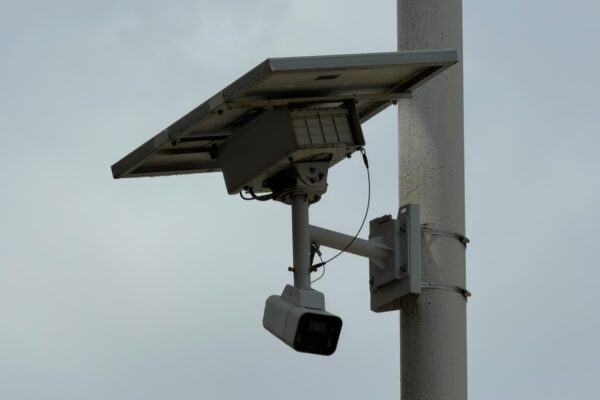
ALPRs are automated cameras that capture images of vehicles and read their license plates to record data such as the plate number, location, date, and time. That information can be stored and used to track movements or identify vehicles.
ALPR companies like Flock Safety are building a mass surveillance system in the United States and Puerto Rico. If there are Flock cameras—or cameras from another company—in your town or community, it means they are tracking, recording, and sharing your movements without a warrant.
Unlike speed or red-light cameras, which only take a photo when a specific violation occurs, ALPR cameras are always on and constantly photographing every passing vehicle, allowing for the creation of comprehensive records of all movements. And that data can reveal highly private details of our lives, including the doctors we visit, the places where we practice our faith, and the protests in which we participate. A massive video surveillance network runs counter to the guarantees of the U.S. and Puerto Rican constitutions.
You can view additional details about hyper-surveillance at this link.
Related Issues
Related Content
Authorized statements from the ACLU of Puerto Rico regarding House Bill 897

House Bill 897
House Bill 1421
Stay Informed
Sign up to be the first to hear about how to take action.
By completing this form, I agree to receive occasional emails per the terms of the ACLU’s privacy statement.
By completing this form, I agree to receive occasional emails per the terms of the ACLU’s privacy statement.