
“Anti-democratic and unconstitutional”: ACLU of Puerto Rico rejects measure that would exclude incarcerated people from the right to vote
June 4, 2026 8:00 am
Spokesperson


Media Contact
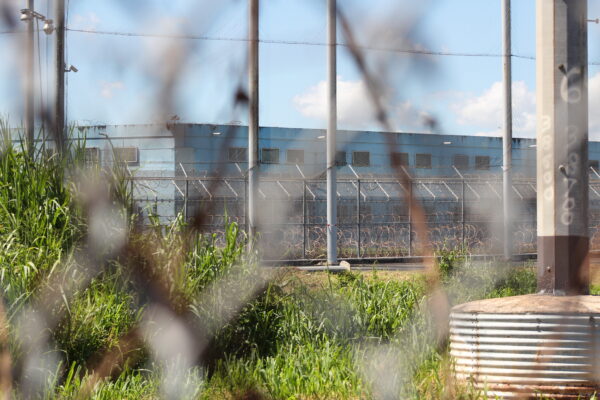
San Juan, P.R. - The Puerto Rico Chapter of the American Civil Liberties Union, ACLU, recommended that the Government Committee of the House of Representatives not advance House Bill 1278, which seeks to eliminate the right to vote for incarcerated people, an attempt that “must be rejected as anti-democratic and unconstitutional,” the organization stated.
“It punishes the victim of the alleged corruption or fraud instead of the perpetrators. It amounts to shifting the State’s responsibility to safeguard the transparency and integrity of electoral processes onto incarcerated voters and restricting their right,” emphasized attorney Lolimar Escudero Rodríguez, Public Policy Attorney for the ACLU of Puerto Rico.
House Bill 1278, which seeks to exclude from the right to vote people sentenced for one or more felonies whose sentence is 10 years or more, was filed on May 14 by Representative Lisie Burgos Muñiz of Proyecto Dignidad and Representative Ensol Rodríguez Torres of the New Progressive Party, PNP. The measure was referred to the Government Committee, chaired by Representative Víctor Parés Otero. The committee has not convened public hearings on the bill.
In its analysis, the organization warned that, although the bill’s Statement of Motives may be understood as invoking the goal of protecting the integrity of electoral processes in response to alleged political manipulation inside correctional institutions, the proposed mechanism, depriving a sector of the incarcerated population of the right to vote, is a constitutionally defective and regressive remedy that violates the fundamental principles of human and civil rights recognized in our legal system.
“To prevent alleged partisan irregularities in prisons, the least restrictive solution is to rigorously oversee the voting processes of the Department of Correction and Rehabilitation and the State Elections Commission, not to eliminate the voter’s constitutional right at its root,” Escudero Rodríguez emphasized.
Along the same lines, she recalled that the electoral irregularities that prompted the filing of this bill, allegations of pressure or vote-buying in prisons, are not the fault of incarcerated people, but rather administrative and institutional failures.
The organization noted that eliminating the right to vote for certain incarcerated people not only affects a right recognized by law since 1980, but also directly violates the mandates of Puerto Rico’s own Constitution, which establishes in Article II, Section 2 that the vote shall be “universal, equal, secret and direct.”
Although the United States Supreme Court held in Richardson v. Ramirez that restrictions on the voting rights of convicted persons are not subject to the strict scrutiny applied in other cases involving electoral restrictions, the analysis is different in Puerto Rico. Because voting is expressly recognized as a fundamental universal right, any attempt by the State to limit that right should face the most rigorous judicial standard. In other words, the government would have to show that the restriction responds to a compelling public interest and that the measure adopted is the least restrictive means possible to achieve that end.
“In Puerto Rico, unlike in multiple jurisdictions in the United States, suffrage has been characterized by our Supreme Court as a fundamental right of the highest order, and therefore it cannot be classified as a mere ‘privilege’ subject to arbitrary regulation,” Escudero Rodríguez explained.
Related Issues
Stay Informed
Sign up to be the first to hear about how to take action.
By completing this form, I agree to receive occasional emails per the terms of the ACLU’s privacy statement.
By completing this form, I agree to receive occasional emails per the terms of the ACLU’s privacy statement.