National Civil Rights Organizations Document Disparities in FEMA’s Response in Puerto Rico in Amicus Brief Before Appeals Court in Boston
May 29, 2026 12:00 pm
Spokesperson


Media Contact
San Juan, P.R. - LatinoJustice PRLDEF, Southern Legal Counsel, Inc., and the American Civil Liberties Union of Puerto Rico (ACLU-PR) filed an amicus curiae brief before the United States Court of Appeals for the First Circuit in the case of Comité Diálogo Ambiental, Inc. v. Federal Emergency Management Agency (FEMA), documenting disparities in the agency’s response in the archipelago.
The lawsuit challenges FEMA’s environmental assessments for the reconstruction of Puerto Rico’s energy infrastructure following Hurricanes Irma and María. The brief argues that FEMA relied on a shorter Programmatic Environmental Assessment and a less detailed environmental review process, instead of conducting the more comprehensive study required by the National Environmental Policy Act (NEPA). It also states that this limits Puerto Rican communities’ ability to fully participate in decisions that will affect the environment, public health, the archipelago’s energy future, and its long-term recovery.
“Puerto Rican communities continue to live with the consequences of disaster recovery decisions made without transparency, public participation, or accountability,” said Lourdes M. Rosado, president and general counsel of LatinoJustice PRLDEF. “Federal agencies cannot rush reconstruction efforts at the expense of environmental justice and the voices of the communities most affected. The decisions made will shape Puerto Rico’s environmental, economic, and public health future for generations.”
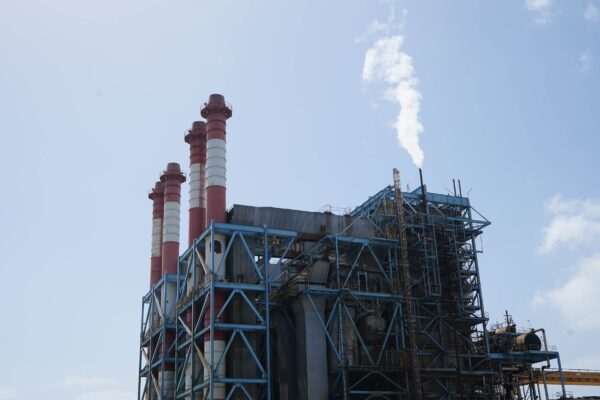
The amicus provides testimony and a national and regional data-based perspective on the institutional consequences of FEMA’s disaster response mechanisms. The research appendix included in the brief, prepared by Professor Nadia B. Ahmad as an expert witness, highlights a funding disparity of nearly 4:1 favoring corporate contractors over direct assistance to affected households. It also reveals a 38% penalty in disaster assistance for rural communities nationwide. In addition, it documented the exclusion of Puerto Rico’s 78 municipalities from FEMA’s National Risk Index data systems, as well as the disproportionate environmental and public health harms imposed on low-income communities living near fossil fuel infrastructure in southeastern Puerto Rico, an area known as “la ruta del hambre.”
This comes as Puerto Rico’s electrical grid prepares to face another hurricane season, which begins June 1, without the resilience review requested by the organizations and aligned with the best interests of communities across the archipelago.
“FEMA is sacrificing long-term community resilience at the altar of administrative efficiency,” said Roberto Cruz, attorney with Southern Legal Counsel, Inc. “By using procedural shortcuts to accelerate the allocation of $12 billion toward the reconstruction of an obsolete, centralized, fossil fuel-based electrical grid, the government has chosen bureaucratic acceleration over a sustainable energy future. The true public interest demands a comprehensive Environmental Impact Statement, not a state-imposed evasion,” he said.
Cruz emphasized that, as Professor Ahmad’s empirical data starkly shows, when the government prioritizes administrative convenience, community participation is silenced and recovery funds are channeled directly to corporate contractors instead of vulnerable households. “The people of Puerto Rico and the United States deserve a transparent process that rejects quick fixes, embraces community-driven data, and respects the people’s inherent right to self-determination in their transition toward renewable, clean, and decentralized energy,” the attorney stated.
The organizations also argued that FEMA’s continued investment in fossil fuel infrastructure runs counter to Puerto Rico’s clean energy goals. The brief warns that if FEMA is allowed to avoid a full environmental review in Puerto Rico, it could set a national precedent allowing federal agencies to move forward with large-scale disaster recovery projects without fully considering their impact on vulnerable communities.
“There is no doubt about the negative impact that fossil fuel-based energy systems have had on communities in Puerto Rico, affecting people’s health, the environment, and Puerto Rico’s economic development. The use of renewable energy is not only the current public policy in the archipelago, but there is also clear evidence that this is the path that best serves the interests and well-being of the people who reside in Puerto Rico,” said attorney Fermín Arraiza Navas, legal director of the ACLU of Puerto Rico.
The organizations urged the Court to affirm the ruling of the District Court of Puerto Rico, which requires FEMA to prepare a full Environmental Impact Statement before moving forward with large-scale reconstruction decisions affecting Puerto Rico’s energy grid.
You can find and download the amicus brief at this link.
Related Content

Amicus Brief - Comité Diálogo Ambiental v. FEMA
Stay Informed
Sign up to be the first to hear about how to take action.
By completing this form, I agree to receive occasional emails per the terms of the ACLU’s privacy statement.
By completing this form, I agree to receive occasional emails per the terms of the ACLU’s privacy statement.