ACLU of Puerto Rico reiterates that measure to amend the definition of the maritime-terrestrial zone prioritizes private interests over the public interest
May 19, 2026 2:30 pm
Spokesperson

Media Contact
San Juan, P.R. — The The American Civil Liberties Union (ACLU) of Puerto Rico reiterated during a public hearing that House Bill 25, which seeks to amend the definition of the maritime-terrestrial zone, disproportionately favors private interests over the public interest, even though the protection of natural resources in the archipelago is constitutionally protected. For that reason, the organization recommended that the bill not be approved.
“The bill weakens coastal protections, facilitates private claims over lands that were previously clearly under public domain, and fails to take climate change and sea level rise into account,” emphasized Lolimar Escudero Rodríguez, Policy Counsel of the ACLU of Puerto Rico, during a public hearing on Tuesday.
House Bill 25 was filed on January 2, 2025, at the very start of the current four-year legislative term. The ACLU of Puerto Rico had already submitted its analysis and opposition to the measure before the House of Representatives, which approved the bill on January 27, 2026. After evaluating the amendments, the ACLU of Puerto Rico concluded that the amended bill did not address the substantial reasons why it does not recommend its approval.
The organization submitted an explanatory memorandum on March 17 before the Senate Committee on Tourism, Natural Resources, and Environmental Affairs, which is evaluating the measure, and was present at the public hearing held on April 15. The ACLU of Puerto Rico resubmitted the memorandum on May 14 and obtained a turn to testify at the public hearing scheduled for May 19.
“Extending the reach of private domain inland from the maritime-terrestrial zone, thereby taking space away from the public domain, is not compatible with our constitutional principle of the most effective conservation, development, and use of our natural resources; rather, it directly undermines it,” Escudero Rodríguez stated in the explanatory memorandum.
The Bill Fails to Consider Scientific Evidence
The document submitted to the Senate committee recalled that the archipelago faces an unprecedented environmental crisis, marked by accelerated coastal erosion, sea level rise, extreme wave events, and the loss of critical habitats such as mangroves and dunes, which serve as natural barriers during extreme weather events such as Hurricane María in 2017.
Given that reality, the organization emphasized that HB 25 does not respond with a science-based legislative proposal to redefine the maritime-terrestrial zone in a way that harmonizes it with constitutional conservation principles and adapts it to current environmental realities, such as coastal erosion and climate change.
“The bill proposes addressing property rights by amending the definition of a constitutionally protected natural resource,” the analysis states.
A bill that reduces environmental protections
By redefining the maritime-terrestrial zone, House Bill 25 weakens the protection of public-domain coastal assets and could significantly reduce the areas considered to be under public domain.
“For example, it reduces environmental protection in sensitive areas such as the mangroves of La Parguera, essential ecosystems for Puerto Rico’s biodiversity and environmental stability,” Escudero Rodríguez warned.
On the other hand, this new definition lends itself to facilitating private claims over lands that were previously clearly within the maritime-terrestrial zone. Moreover, the organization warned, the proposed definition will have the effect of exacerbating existing conflicts between public and private use, since it lacks mechanisms to protect “traditional enjoyment.”
The ACLU recognized that the law allows some concessions for private use of public-domain assets by natural and legal persons. However, it warned that these are evaluated on a case-by-case basis and “are not addressed by amending the definition of a natural resource protected by the Constitution.”
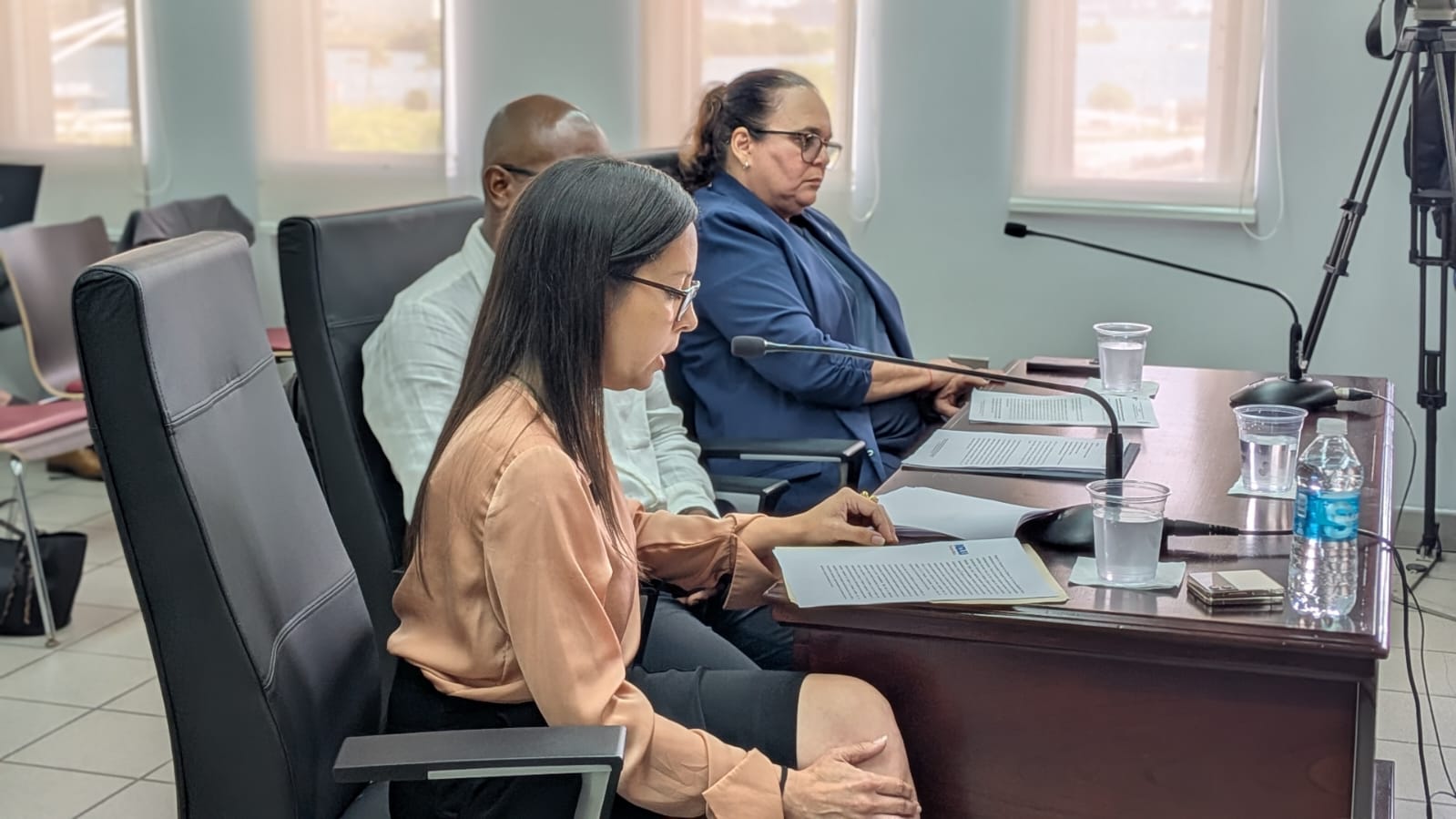
Lolimar Escudero Rodríguez, Public Policy Attorney for the ACLU of Puerto Rico, during the public hearing of House Bill 25 before the Senate Committee on Tourism, Natural Resources, and the Environment.
Juan González
Related Issues
Related Content

Authorized statement regarding House Bill 25 and the proposed redefinition of the maritime-terrestrial zone (MTZ)

House Bill 25
Stay Informed
Sign up to be the first to hear about how to take action.
By completing this form, I agree to receive occasional emails per the terms of the ACLU’s privacy statement.
By completing this form, I agree to receive occasional emails per the terms of the ACLU’s privacy statement.