ACLU of Puerto Rico Argues Before the First Circuit in Boston Against the Fiscal Oversight Board’s Attempt to Keep Civil Rights Lawsuits Stayed
April 8, 2026 1:00 pm
Spokesperson
Media Contact
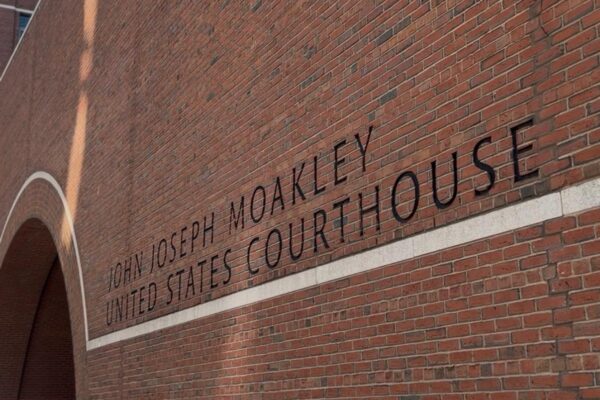
Boston, Mass. - The American Civil Liberties Union of Puerto Rico (ACLU of Puerto Rico) argued today before the U.S. Court of Appeals for the First Circuit in Boston in defense of the order issued by federal Judge Laura Taylor Swain, who clarified that the protections of the Debt Adjustment Plan under PROMESA cannot be used to stay civil rights lawsuits against public officials and former public officials in their personal capacity.
The oral argument took place after the Fiscal Oversight Board appealed Swain’s ruling, which rejected the attempt by the government of Puerto Rico and the Board itself to improperly extend PROMESA’s reach in order to prevent claims for damages against individual officials from moving forward.
“We reiterated before a panel of appellate judges that PROMESA cannot serve as a shield for officials and former officials facing personal claims for abuses of power. Defending that line before the First Circuit is defending the force of civil rights and access to justice,” said Fermín Arraiza Navas, legal director of the ACLU of Puerto Rico. “Our archipelago will not become a civil-rights-free zone under the pretext of a debt created by the very officials who violate rights,” he added.
The controversy arises from the case brought by Jonathan Hernández Zorrilla and Yadira Carrasquillo González, who alleged violations of their rights to free speech, protection against unreasonable searches, freedom from excessive force, due process, and equal protection under the law, stemming from events that occurred during a demonstration against PROMESA in San Juan on May 1, 2018. Among those sued in their personal capacity are former Governor Ricardo Rosselló and former Secretary of Public Safety Héctor Pesquera.
The litigation was stayed in September 2023 under the Title III Adjustment Plan. That same month, the ACLU of Puerto Rico asked the Fiscal Oversight Board to lift the stay and argued that the suspension did not apply to civil rights lawsuits against officials in their personal capacity. After receiving no response from the Board, on February 15, 2024, the ACLU of Puerto Rico filed a Request for Stay Relief in the Title III case.
In her order, issued on September 30 of last year, Judge Swain made clear that damages claims against officials in their personal capacity are not barred by the Commonwealth’s Plan of Adjustment and rejected the argument that possible indemnification under Law No. 9 — which does not require the government to assume indemnification in personal-capacity lawsuits against officials — transforms those claims into claims against the government.
In the ACLU of Puerto Rico’s case, the officials are not sued in their official capacity, but in their personal capacity. Therefore, there is no vicarious liability, and the only party responsible for any judgment or verdict is the official in their personal capacity. The Plan, the ACLU reiterated, only covers direct liabilities of the debtors, not those of third parties or officials in their personal capacity. Claims against third parties were not negotiated by Board members and are not part of the certified Debt Adjustment Plan.
“What is at stake in this case is a fundamental principle of accountability and the fact that no public official may hide behind PROMESA to evade personal responsibility for civil rights violations. Puerto Rico’s fiscal crisis cannot become a license for impunity,” said Steven Lausell Recurt of the Inter American University of Puerto Rico Legal Aid Clinic, who presented oral argument before the First Circuit as a collaborating attorney with the ACLU of Puerto Rico.
The organization stressed that the Board’s appeal seeks to advance a dangerous interpretation of PROMESA that, if adopted, would make it harder for people whose rights have been violated to obtain full judicial remedies in federal court. The Board’s position also puts the Puerto Rico Police Bureau Reform at risk.
It also emphasized that allowing an expansive reading of the Plan of Adjustment to cover individual defendants would alter central principles of federal civil rights law and would have the effect of weakening the personal accountability of those who, from positions of public power, commit constitutional violations. The ACLU noted the irony that the Board’s lawyers claim to be protecting the Commonwealth and its finances while billing millions of dollars precisely at the Commonwealth’s expense.
“This case is not about a technical bankruptcy proceeding measured in dollars and cents. It is about whether people can demand individual accountability when state actors violate their fundamental rights. We will remain vigilant to ensure that PROMESA does not displace or erode those guarantees,” said Annette Martínez Orabona, executive director of the ACLU of Puerto Rico.
Recordings of the oral arguments are available on the official website of the U.S. Court of Appeals for the First Circuit.

Stay Informed
Sign up to be the first to hear about how to take action.
By completing this form, I agree to receive occasional emails per the terms of the ACLU’s privacy statement.
By completing this form, I agree to receive occasional emails per the terms of the ACLU’s privacy statement.