Criminal Law Reform

Puerto Rico’s criminal legal system is plagued by inequities that disproportionately harm low-income people and communities of color. The ACLU of Puerto Rico is working to reform these laws and practices — from over-policing and excessive sentencing to racial bias and pretrial detention — to build a system rooted in fairness, transparency, and justice.

Criminal Law Reform

What you need to know

Join Us in Building a Fairer System

The ACLU of Puerto Rico is pushing for comprehensive criminal code reform — ending excessive sentencing and cash bail, and promoting rehabilitation over incarceration. You can take action by learning more, sharing our research, or contacting legislators to support justice reform.

Key Issues

The criminal legal system in Puerto Rico too often prioritizes punishment over progress. The ACLU advocates for reforms that reduce incarceration, promote rehabilitation, and strengthen public safety through fairness and accountability.

Over-Policing: Communities of color and low-income neighborhoods face disproportionate police presence and arrests for minor offenses.

Bail Reform: The cash bail system unfairly punishes those who cannot pay, keeping people in jail before trial.

Sentencing Reform: Harsh sentencing laws have failed to reduce crime and have devastated families and communities.

Rehabilitation & Reentry: People leaving incarceration face barriers to housing, employment, and education — making true reintegration nearly impossible.

ACLU of Puerto Rico

The Latest

News & Commentary
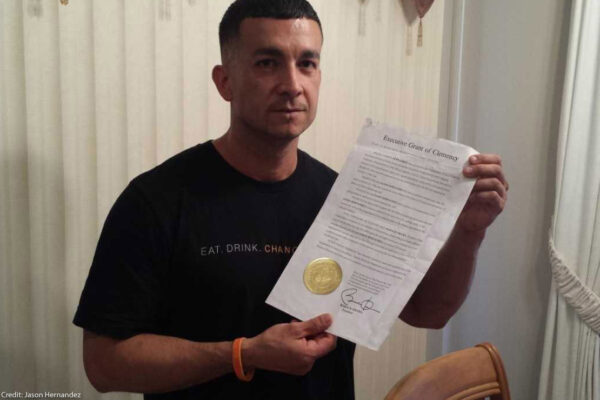
Jason Hernandez holding his executive grant of clemency given by President Barack Obama.

Clemency, Redemption, and Justice: A Personal Story

In 1998, at the age of 21, I was sentenced to life without parole plus 320 years for drug-related offenses that were committed mostly in my teens. In 1998, 16 years into my sentence, I received clemency from President Obama after writing a letter to him asking for forgiveness, asking for mercy, asking for understanding that I wasn’t a bad kid, just a kid who made a bad decision. That I wasn’t that person who roamed those streets long ago or the same person who stood in front of the judge and received a life sentence, and as a result I shouldn’t die in prison.  President Obama agreed.  I was extremely fortunate. Those who sought a commutation of their sentence before Obama’s presidency, when George W. Bush was in office, had a 1 in 1,000 chance of success. While conducting research as I prepared my own clemency application, I learned that only one other person serving life without parole for a drug offense had ever been granted clemency. Because of this, I have always compared my clemency to hitting the lottery. But instead of winning millions of dollars, I won my freedom.  Unfortunately, I am just one of the thousands upon thousands of people who after years or even decades in prison, have matured and changed their way of thinking. But because of mandatory minimums and truth in sentencing laws(another supposedly “tough on crime” sentencing scheme that is really just tough on people), and the inaccessibility or unreliability of parole, there are no judicial remedies to acknowledge the transformations of these individuals.  However, there is an extraordinary executive power that allows a show of mercy to be made: clemency.  Clemency has historically been relied upon in America as an olive branch extended to those unduly harmed by our system of mass punishment. It has been used as a tool to heal people, communities, and our very nation, and in doing so, has engendered reconciliation among its citizens. Clemency is a corrective measure that counteracts some of the effects of a flawed system. But the degree to which it can do so is mirrored by the degree to which it is used. Though it may often be overlooked today, clemency has been a key facet of our republic since its founding.  Alexander Hamilton, who played a pivotal role in ratifying the Constitution, saw the value of investing in the office of the presidency the ability to grant clemency to groups during periods of national crisis. Hamilton outlined this in the Federalist Papers: “In seasons of insurrection or rebellion, there are often critical moments, when a well-timed offer of pardon to the insurgents or rebels may restore the tranquility of the commonwealth; and which, if suffered to pass unimproved, it may never be possible afterwards to recall.”  Not long after this statement, President George Washington would use his pardon power after the suppression of the Whiskey Rebellion of 1794. The President pardoned two people who were considered leaders of the rebellion and had been sentenced to death. Washington’s legacy was later echoed in President Lincoln’s choice to issue 64 pardons for war-related offenses. They were part of his Proclamation of Amnesty and Reconstruction, his blueprint for the reintegration of the South into Union.  In the century that followed, between 1918 and 1920, more than 2,000 people were convicted of sedition and other violations of the Espionage Act for speaking out against the American involvement in World War I. In 1921, President Warren Harding reacted by issuing blanket pardons to all those convicted under the Espionage Act. Still decades later, attempting to bring a close to the era of American conflict in Vietnam, President Jimmy Carter offered a blanket pardon to any American who had dodged the draft during the war. These are all examples of how Presidents exercised their clemency power during and after periods of war to bring the nation together so that it might move forward in unity. That legacy must be resurrected again today to combat the legacy of another war: the war on drugs and related “tough on crime” policies that have actually been a war on Black and Brown communities.  These pervasive modern wars have left about 80 million people in this country with arrest records, 8 million with felony convictions, and more than 2 million people currently in our jails and prisons. With statistics like these, and decades of harsh crime policies in place, we can debate which policies should have been implemented and which shouldn’t have. But one thing is clear: America’s “tough on crime” movement was misguided, ill-advised, and has hurt the communities it intended to help.  From former President George Bush to current President Donald Trump, and from Govs. Tom Wolf of Pennsylvania to Kevin Stitt of Oklahoma, elected officials have exercised their clemency power to give individuals back their freedom, many of whom have been in prison for years or decades under “tough on crime” laws enacted in the 1980s.  I was one of those fortunate souls, and my release granted me more than freedom. It was a chance at redemption.  Clemency is not and should not be viewed as a tool used by officials who are “soft on crime.” Instead, it is a tool whose use signals an official’s wisdom about our nation and the nature of our mass punishment system, whose roots lie in slavery but whose functions are present in the lives of too many people today. These punishments that may have appeared necessary and just at one time, but their lie has been exposed: Putting too many people in prison for too long does not keep people safe, and it certainly does harm to the loved ones of those who are incarcerated.  In a 2003 speech, former Supreme Court Justice Anthony Kennedy referred to pardon power as a necessity to ensure justice is administered and adjusted over time:  “A people confident in its laws and institutions should not be ashamed of mercy. The greatest of poets remind us that mercy is ‘mightiest in the mightiest. It becomes the throned monarch better than his crown.’ I hope more lawyers say to chief executives, ‘Mr. President,’ or ‘Your Excellency, the Governor, this young man has not served his full sentence, but he has served long enough. Give him what only you can give him. Give him another chance. Give him a priceless gift. Give him Liberty.’”  I know personally that when the gift of clemency is given to a person, it reverberates throughout our souls that we are not only a nation of opportunity, but also of second chances, of mercy and hope — even for those who may have done wrong — even for those in prison. For as Justice Kennedy said in his closing remarks on clemency, “[S]till, the prisoner is a person. Still he or she is part of the family of humankind.”

News & Commentary
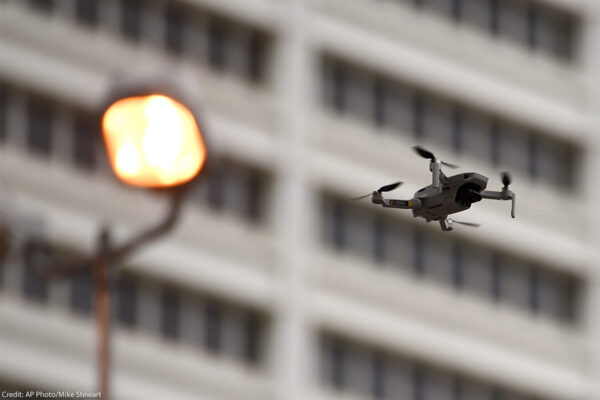
A law enforcement drone in flight.

ACLU Seeks Information on Government’s Aerial Surveillance of Protesters

In the midst of nationwide protests against police brutality, local, state, and federal law enforcement agencies have reacted with brutal force and widespread surveillance. Not only are many agencies suppressing protest and intimidating protestors with batons and tear gas on the ground — they are also circling overhead. The government is using a deeply invasive, coordinated aerial surveillance campaign to monitor Black Lives Matter protests, gather information, and surveil people exercising their First Amendment rights.   Today, we submitted Freedom of Information Act (FOIA) requests to the Federal Aviation Administration, Department of Homeland Security, and the Department of Justice calling for more information on the use of aerial surveillance on protesters.   The government has deployed helicopters, airplanes, and border drones over American cities to systematically monitor peaceful protests . An investigative report by the New York Times found that the Department of Homeland Security alone had logged at least 270 hours of surveillance footage on these racial justice protests this spring and summer. The collected footage was ultimately channeled into a digital network — accessible by federal and local law enforcement agencies for use in future investigations — with the ominous name “the Big Pipe.” Other law enforcement and military agencies, including the FBI, National Guard, and local police departments also requested deployment of private or government-owned aircraft for the purpose of surveilling protests. This widespread surveillance has been carried out across the country — from the big-city protests in NYC, Portland, Chicago and LA, to 20-person protests in small towns across the country.   This surveillance has also been carried out with an unjustifiable level of secrecy. Agencies like the FBI regularly try to hide the identity of their aircraft by registering them through dummy corporations. For weeks, U.S. Customs and Border Protection refused to say which agency had requested use of its Predator border drone over Minneapolis protests in May. Protesters and communities still have no idea what kind of cutting edge, high-tech equipment these aircraft — piloted and unpiloted — may be carrying.   As aerial surveillance continues, the public deserves much more information. In our FOIA requests, we are asking for information about the involvement of private companies; coordination between different law enforcement agencies; the processes by which surveillance flights are proposed, approved, or authorized; the scope of surveillance; the capabilities of the cameras and other surveillance tools deployed; and the surveillance footage itself.   We live in a democracy and Americans have a right to decide what kinds of surveillance law enforcement is permitted to engage in over our communities. But we can’t do that if we don’t know what’s going on.   A prime example of government policymaking that needs more sunlight is the FAA’s issuance of a “temporary flight restriction” over Portland in July, as that city became the center of renewed nationwide protests over police abuse in general and abusive practices by federal officers, sent to the city over local objections, in particular.   Unfortunately, there is a history of the FAA creating flight restrictions over protests at the request of law enforcement to limit the ability of reporters and community members to engage in aerial photography of police behavior. The agency restricted airspace over the Dakota Access Pipeline protests in 2016, and before that in Ferguson, Missouri during the 2014 protests following the death of Michael Brown. In 2014, documents and audio recordings proved that the purpose of the Ferguson no-fly zone was not the protection of public safety, as government agents claimed, but to keep news helicopters away.   In Portland, Oregon, the FAA’s restrictions prohibit drones except for those with “an approved special governmental interest airspace waiver that has been granted for operations in direct support of an active national defense, homeland security, law enforcement, firefighting, search and rescue or disaster response mission.”   In short, this flight restriction leaves room for government agencies to use aircraft to surveil the public, but severely limits the ability of the public to record the government. That may be how law enforcement agencies like it, but it’s exactly backward: Government surveillance of the public should be strictly regulated, but the public’s ability to monitor what law enforcement officials are doing should be broadly free and unrestricted. That is why protesters should be able to record the police using drones — and that is why we have filed a FOIA request to find out more about aerial surveillance of protests by law enforcement.
Press Release
Placeholder image

ACLU of Puerto Rico asks Supreme Court to halt use of Law 54 against minors

The organization filed an amicus brief in a case before the highest court involving two teenagers, in which one of the parties has been prevented from attending school in person
Know Your Rights
ACLU of Puerto Rico

Local Protection, Safety for All

Sanctuary policies are local measures designed to protect all people in a community, regardless of immigration status. These policies ensure that municipal and state governments do not use local resources to enforce federal immigration laws, prioritizing safety, trust, and community well-being instead.
Legislation
Jun 03, 2025

House Bill 519

The American Civil Liberties Union (ACLU) of Puerto Rico, a nonpartisan, nonprofit organization dedicated to advancing civil and human rights, does not support House Bill 519. Passage of House Bill 519 would violate the constitutional right to bail and the prohibition against excessive bail, would severely limit judicial discretion, and would have a disproportionate impact on the most vulnerable populations.
Status: Activo